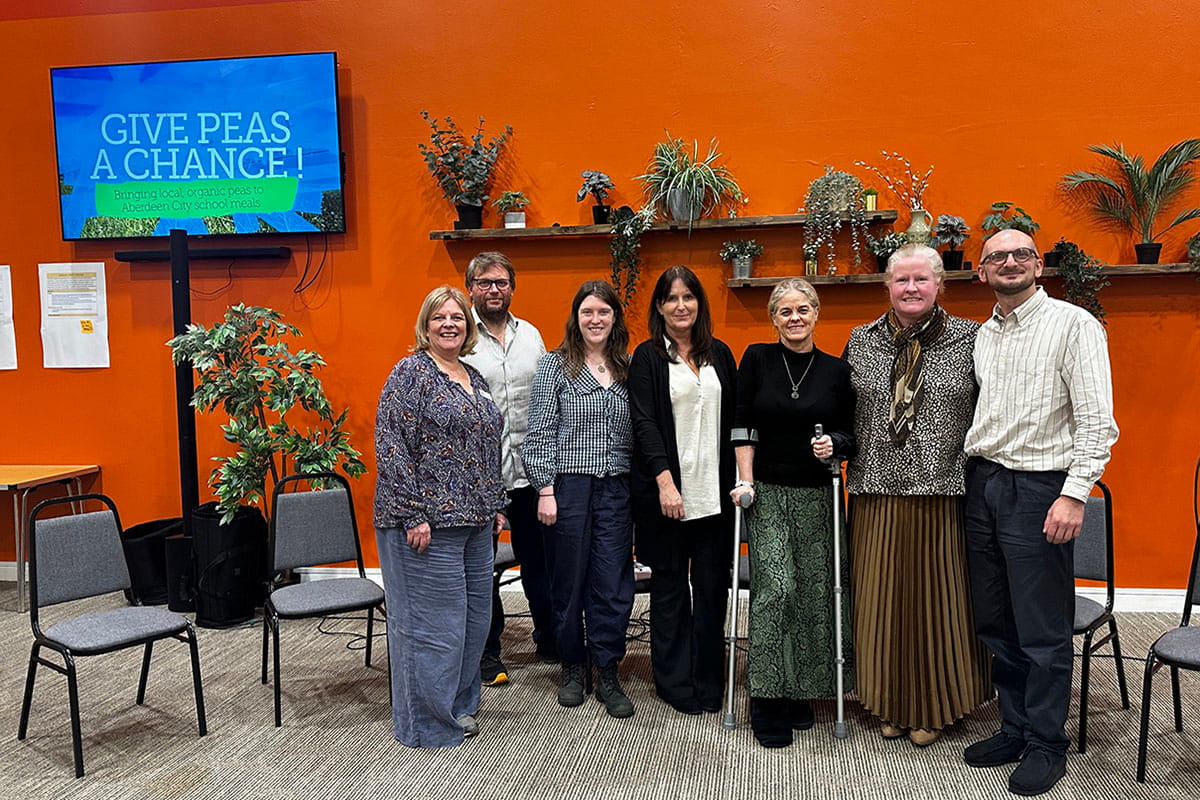
Aberdeen sets a national benchmark with Scotland’s first Gold Sustainable Food Places award
Our visit coincided with a milestone moment for the city: Aberdeen recently became the first city in Scotland, and only the sixth in the UK, to receive the prestigious Gold Sustainable Food Places Award. This recognition highlights Aberdeen’s outstanding, long term commitment to building a food system that is healthier, more resilient, and more equitable for all who live in the Granite City.
The award acknowledges the city’s whole system approach, an approach that we saw reflected throughout our visit. From tackling food poverty through dignified access to affordable, nutritious food, to nurturing a vibrant culture of food citizenship and community participation, Aberdeen’s model demonstrates the power of partnership. The leadership of Granite City Good Food, hosted by CFINE, has been central to this achievement, coordinating efforts across more than 93 Community Food Members, local growing spaces, education providers, and public sector teams. Read more on Granite City Good Food, including local case studies.
Aberdeen recognised with Gold Sustainable Food Places award
Give Peas a Chance! pilot project
A highlight of the Consortium was the launch and presentation of the impact report for Give Peas a Chance! pilot project, published by Soil Association Scotland. This award winning initiative has attracted national attention, not only for its innovation but for the meaningful benefits it brings to pupils, producers, and local food systems across Scotland.
Connecting young people with climate friendly food
At its heart, Give Peas a Chance! is about helping young people understand the role that food plays in addressing climate and nature challenges. By incorporating Scottish grown organic split peas into school meals, the project connects Aberdeen City pupils with ingredients that are nutritious, sustainable, and rooted in local farming systems.Creating a new market for Scottish peas
The project has also supported the development of a new human consumption market for Scottish peas, opening up opportunities for farmers and processors that previously didn’t exist at scale. By proving that locally grown organic peas can be integrated into public sector meals, the programme lays the groundwork for longer term demand across Scotland’s school meal services and beyond.Encouraging more sustainable crop rotations
In addition, the project encourages farmers to incorporate more peas into their crop plans, not only as a commercial opportunity but because peas naturally enrich the soil. While the technical description of nitrogen fixation is well documented, the broader benefit is simple: growing more peas helps reduce the need for synthetic fertilisers, supports soil health, and contributes to farm resilience.
Strong partnerships at the core
The success of Give Peas a Chance! reflects the combined efforts of a powerful partnership that includes:
- Soil Association Scotland
- Aberdeen City Council
- Pea producer and farmer Phil Swire
- The Royal Highland Education Trust (RHET)
- The Royal Northern Countryside Initiative (RNCI)
These relationships have been essential in designing the supply chain, crafting educational resources, engaging pupils, and bringing the peas from field to plate in Aberdeen’s schools.
National recognition for excellence
In recognition of its innovation, sustainability focus, and positive impact on children’s health, the project was named Best Local Initiative Championing Children’s Healthy Food at the 2025 Children’s Food Awards. This well deserved accolade reflects both the creativity behind the initiative and its strong potential for replication across Scotland.
Celebrating the people who make good food happen
On the Monday evening of our visit, we had the pleasure of meeting some of the individuals who have brought the Give Peas a Chance! pilot project to life. We were joined by farmer Phil Swire, whose dedication to soil health and regenerative farming has been pivotal; by passionate representatives from Aberdeen City Council; and by the wonderful school caterers, whose enthusiasm and creativity have made the peas truly shine in school kitchens.
Their contributions were celebrated over a table filled with delicious dishes, including the now famous pea brownies, a delicious triumph that showcased just how versatile these little green powerhouses can be. The joy, pride, and imagination of the catering teams were genuinely inspiring. Their willingness to experiment with new ingredients and bring pupils on that journey is a big part of why the project has been so successful.
A growing movement: Moray and Highland councils join the journey
The project’s success has already sparked wider adoption. In 2025, Moray Council and Highland Council joined Give Peas a Chance! integrating Scottish organic split peas into their own school meal menus. This expansion demonstrates the scalability of the model and the growing appetite across local authorities to embrace regional, sustainable ingredients.
With these councils on board, thousands more pupils across the north of Scotland now have access to meals that are not only nourishing and delicious but that help them understand how food systems work and how their own choices can be part of a climate friendly future.
A shared vision for Scotland’s good food nation
The fourth Living Good Food Nation Lab Consortium highlighted what is possible when communities, local authorities, producers, and organisations work together toward a shared vision. Throughout our time in Aberdeen, we witnessed a city that is putting food at the centre of its social, environmental, and economic ambitions. From community growers to school cooks, from farmers to policy teams, the collective effort is remarkable and it is delivering tangible, meaningful change.
Aberdeen’s Gold Sustainable Food Places Award sets a powerful example. Soil Association Scotland’s Give Peas a Chance! project demonstrates what innovation and partnership can achieve. And the people behind these efforts remind us that building a Good Food Nation is, above all, about relationships, relationships with food, with land, and with each other.

Louise Oliver is our Research Project Coordinator.