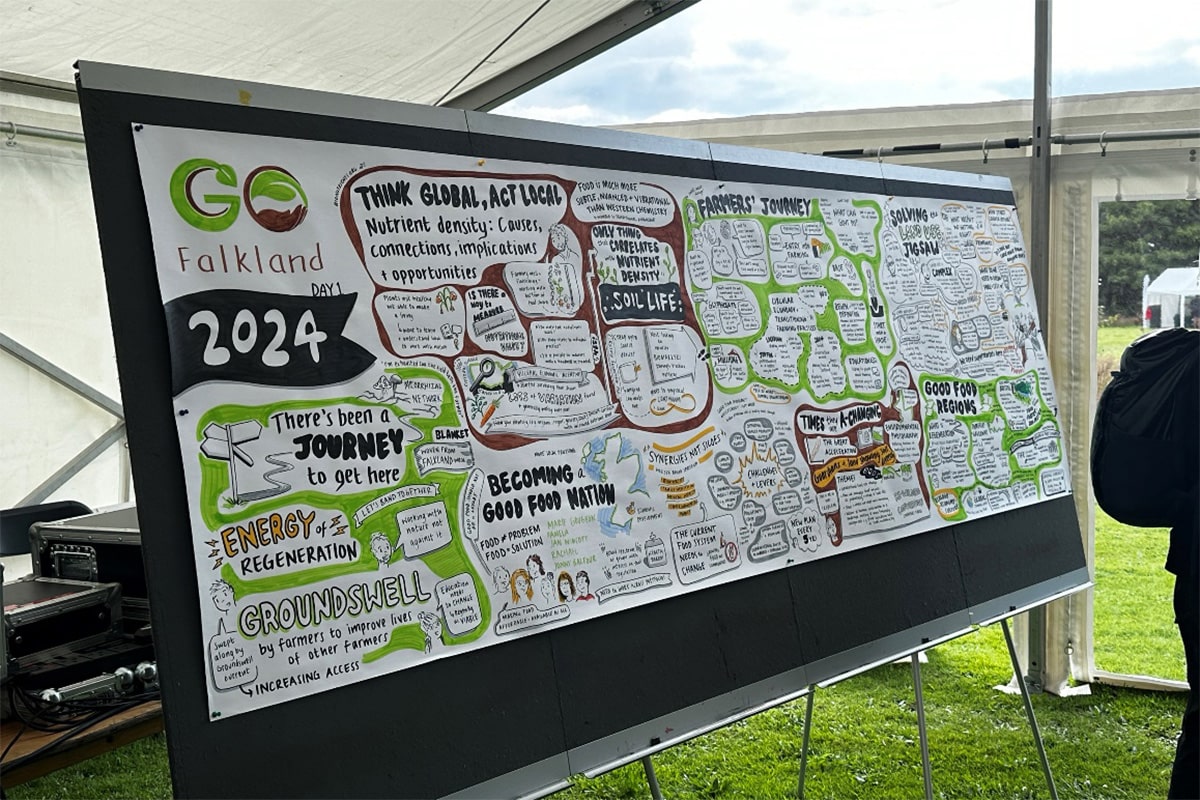
Mycorrhizal, sociocracy, regenerative, ecological units, and emergence are just a few of the circled words in my notebook from the 2024 GO Falkland conference. The words bring to life the energy and sense of connection that the meeting had, and are indicative of the transformative potential the Good Food Nation (GFN) Act can catalyse. As the Grassroots and Community Fellow, I was particularly interested in the ways in which knowledge, data, and sharing existed over the two days, and how, who, and what, change was expected from.
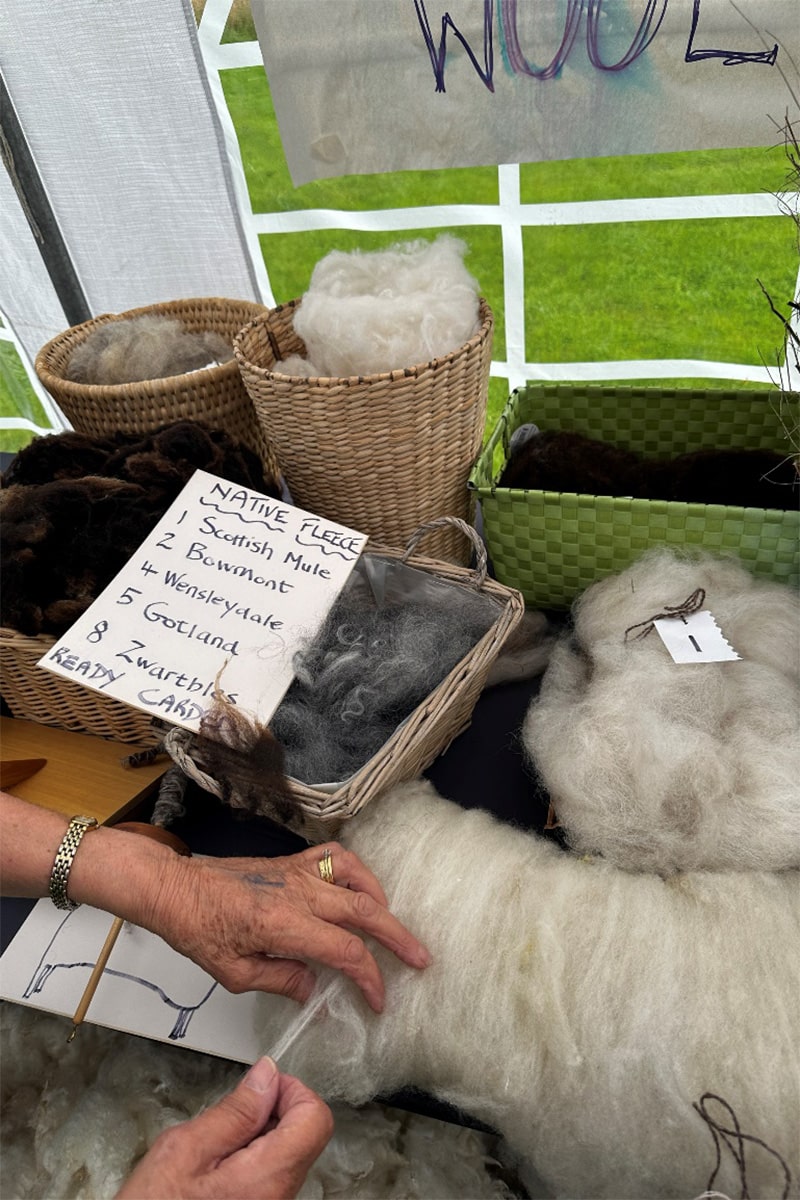
From the Fibre Shed came a tactile demonstration of the central goal of the GFN Act: ecological, or systematic, integration and transformation. I spoke with a talented tapestry artist and wool producer who took me through the various types of Scottish fibres and yarns, descriptions of coarseness and levels of lanolin evoking landscapes of blustery Shetland cliff edges and salt breezes from Iona, embedding into the single origin local breeds herded on the island. An assembly of single kinked fibres together can produce a quilt, jumper, rug, or artwork. In recognising the interconnectivity and cumulative gains associated with working cooperatively, we can bring about necessary changes to our food system in Scotland.
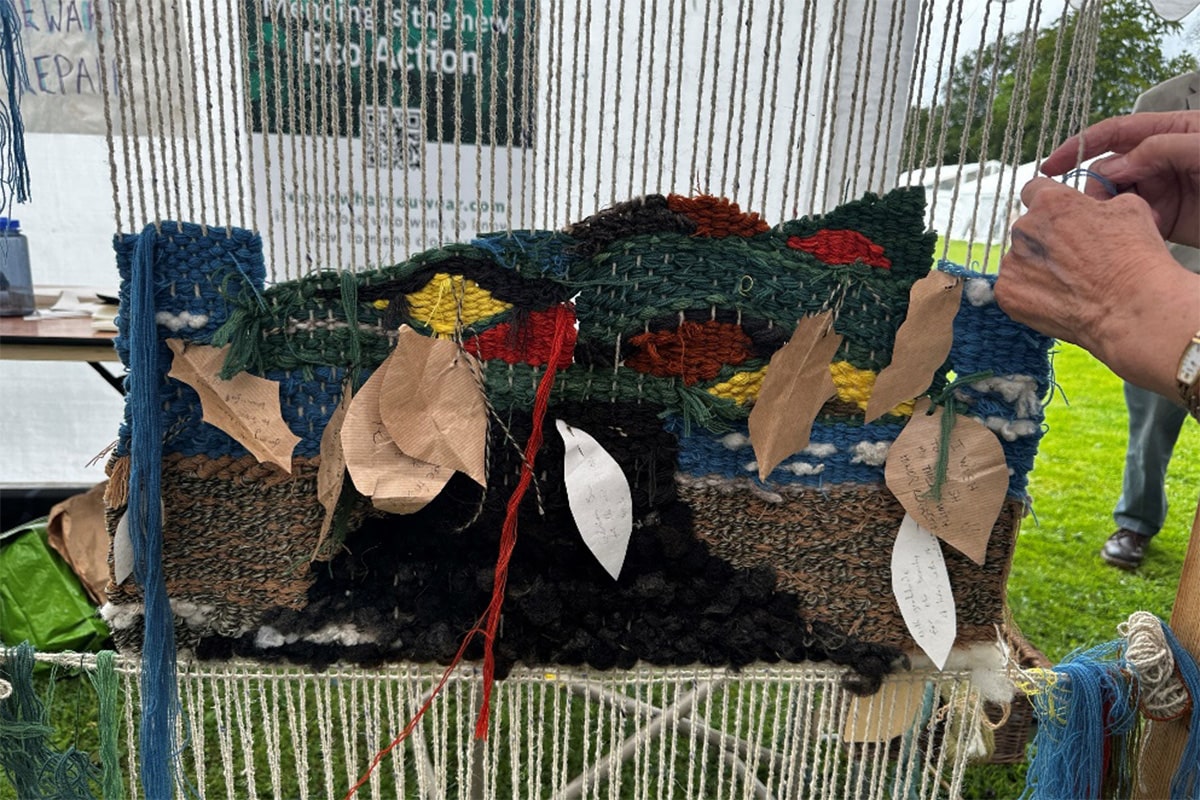
Whilst we spoke, I began braiding the collective ‘tapestry of wishes’, which had been roughly designed to emulate a tree of life. The indigo blue yarn stained from a plant grown in the region, stimulated my thinking around the food system’s integrative capacities, levers, and binding constraints. Such thoughts were further propelled during a policy panel discussion, in which a colleague asked – ‘how can we ensure we are not having the same conversation in five years?’. The urgent pace necessary for minimising already catastrophic impacts of climate change butts against the slower, and sometimes misaligned, cogs of policy. Questions of change and time are central to how the Living Good Food Nation Lab operates, and we seek to provide blueprints for Local Authorities and Health Boards to produce their own, contextually-specific GFN Plans inspired from already-existing examples of transformative food work in the nation.
In addition to the GFN Act, opportunities like the Agriculture and Rural Communities Bill and Minimum Income Guarantee Expert Group, and resources provided by Scottish Community Buyout levels, Land Matching Scotland Service, and Local Development Trust Scotland, have the possibility to build capacity to strained council budgets and to work together rather than in inefficient silos. Like the intricate braiding of the tapestry, the GFN Act requires collective action and integrated thinking, and as several speakers shared, the words of Dr Janine Beynus continue to offer a simple, elegant approach to adopt to foster a sustainable Scotland: life creates the conditions conducive to life.